

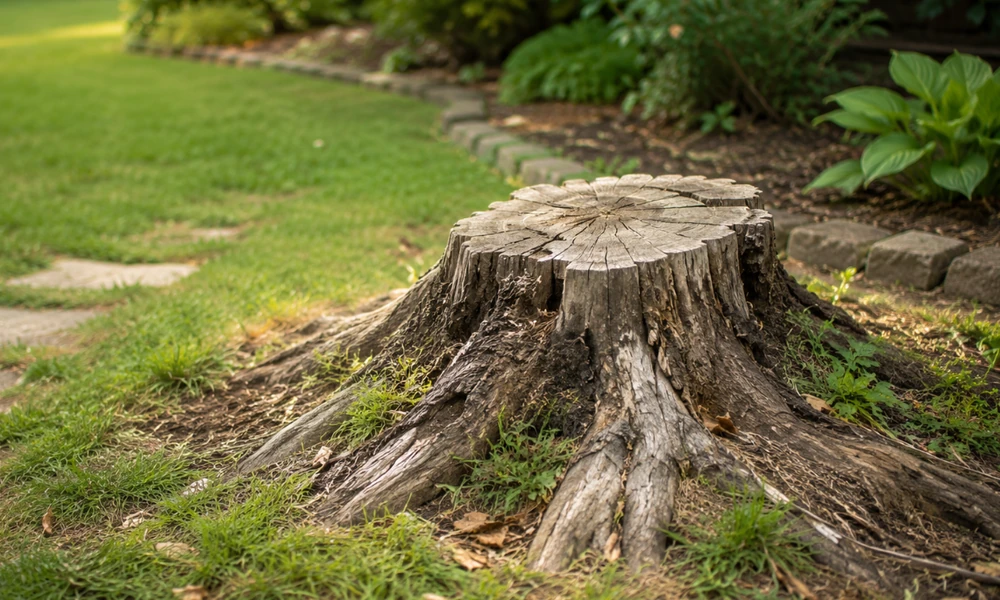
Old tree stumps may seem harmless at first. After a tree is cut down, the stump often gets left behind because it feels easier than removing it. It sits in the yard, blends into the landscape, and slowly becomes part of the property.
But an old stump can create more problems than many homeowners expect. It can affect safety, attract pests, damage lawn equipment, and make outdoor spaces harder to use.
One of the biggest risks is tripping. A stump close to a walkway, driveway, patio, or play area can become a hazard. This is especially true when grass grows around it or when lighting is poor. Children, guests, delivery workers, and even homeowners can easily miss it.
The exposed roots around a stump can be just as risky. Roots may stick up through the lawn and create uneven ground. Someone walking through the yard can catch a foot on the root and fall. These hazards may seem small, but they can lead to real injuries.
Old stumps can also interfere with lawn care. Mowers, trimmers, and other yard tools can hit the stump or roots. This can damage equipment and create safety concerns. A mower blade striking hidden wood or roots can become dangerous quickly. It also makes maintaining the lawn more frustrating.
Another concern is pests. As a stump decays, it can attract insects and other unwanted activity. Termites, ants, beetles, and other wood-boring insects may move into the rotting wood. Once pests settle in, they may spread to nearby trees, shrubs, fences, decks, or structures.
Not every stump will cause a pest problem, but leaving decaying wood in the yard increases the chance. Moisture, shade, and soft wood make old stumps more inviting over time.
Stumps can also encourage fungal growth. Mushrooms or fungal bodies may appear around the stump as the wood breaks down. Some fungi are part of natural decay, but they can also signal that the stump is holding moisture and decomposing. In some cases, fungal issues can spread through connected roots or affect nearby plants.
Old stumps may also send up new shoots. Some tree species try to regrow from the stump or root system. These shoots can become an ongoing maintenance problem. You cut them back, then they return again. Over time, this can make the yard look messy and create extra work.
There is also a property appearance issue. A stump can make a landscape look unfinished. Even a well-kept lawn may feel neglected if an old, cracked stump sits in the middle of it. Removing it can open space for grass, planting beds, walkways, or outdoor seating.
In smaller yards, stumps take up valuable usable space. They can limit where furniture, play equipment, garden beds, or landscape features can go. What seems like a small leftover piece of wood can affect how the whole yard functions.
Ignoring a stump can also make removal harder later. As the stump decays unevenly and roots spread or settle, the area around it may become more difficult to manage. Soil can shift, holes can form, and roots can remain hidden below the surface.
The best approach depends on the location and condition of the stump. Some small stumps may be removed manually. Larger stumps often require grinding or professional removal. Stump grinding usually reduces the stump below ground level so the area can be covered with soil and restored.
After removal, the space should be cleaned, leveled, and prepared for new use. This helps reduce trip hazards and improves the appearance of the yard.
Old tree stumps are easy to ignore, but they can create safety and maintenance problems over time. Removing them helps protect your property, improve curb appeal, and make outdoor areas easier to use.
A clean yard is not only about looks. It is also about safety, access, and long-term care.
This post was written by a professional arborist at Tree Trimming Clearwater Florida. Robert Miller is the owner of Arbor Wise Professional Tree Care, a locally owned and operated tree service company that offers superb lawn care by the most experienced Arborists. Arborwise Tree Services is a tree removal company that offers stump removal, tree pruning, stump grinding, fertilization, and tree restoration. We have an extraordinary lawn care industry notoriety covering the Pinellas county area.
